Youtube used AI to analyze +8,000 top ads. Here’s what was learned for you
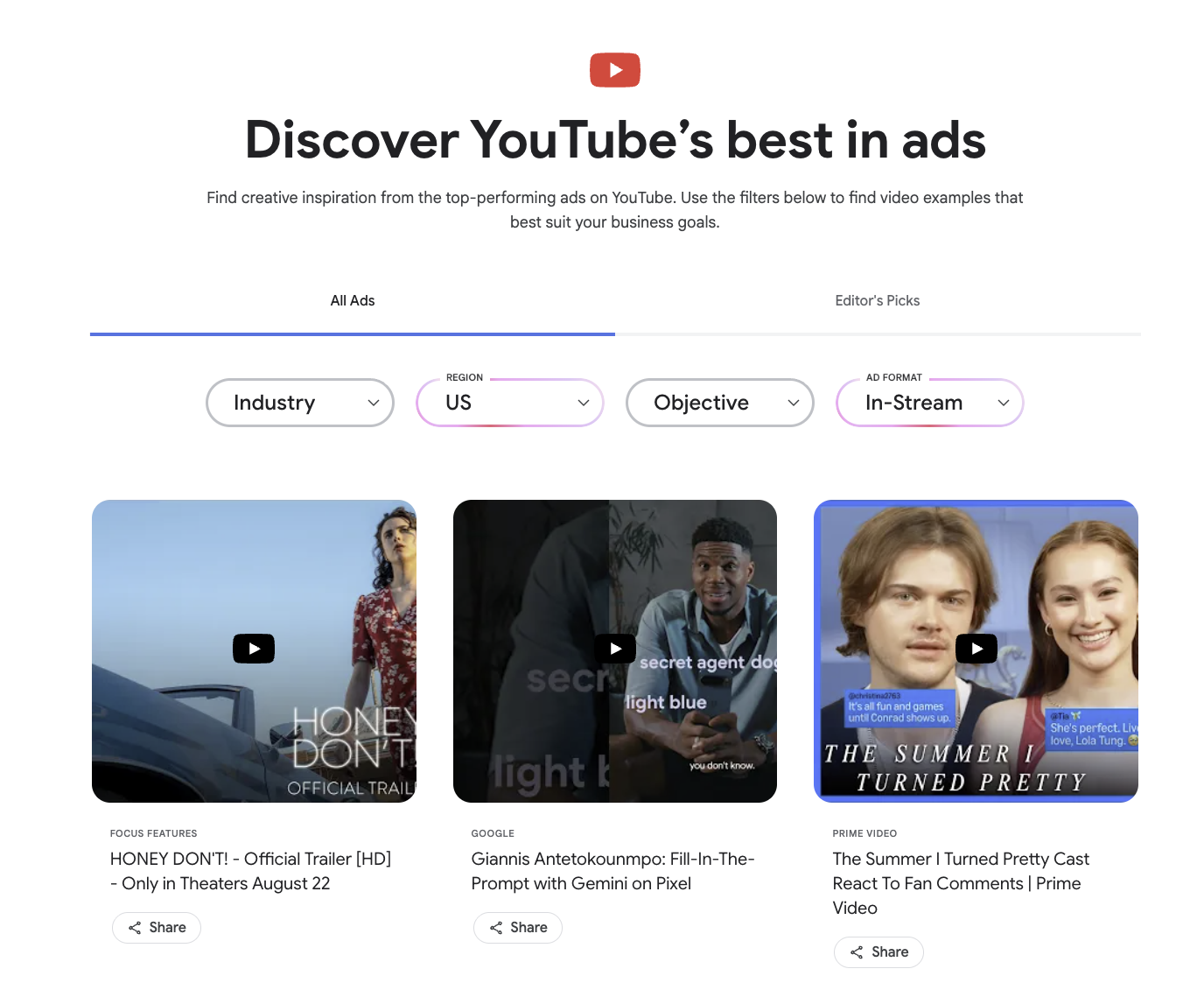
A menu update announced via live stream. A short film about a brand’s sustainability mission. A content series highlighting trailblazers in skateboarding. All of these brand stories, and many more, find a home on YouTube.
Advertisers choose to unleash their creativity on the platform because of its unique ability to reach engaged audiences across every screen and format. Many more advertisers use it to find the most interesting, thrilling, and inspiring creative work, or to see what other brands are doing. But even the most rigorous study of the video marketing landscape will miss patterns that could yield meaningful insights about how and which stories ignite audiences’ emotions.
That’s why our data scientists enlisted Google AI to analyze 8,000 campaigns from top advertisers that ran on YouTube over the last six months.
Using a custom large language model to extract insights, including sentiment, themes, visual elements, spoken language, music, cultural references, and more, the team found hidden connections between seemingly disparate videos from Brazil, France, Germany, India, Japan, Korea, the U.K, and the U.S. Next, they deployed an algorithm that clustered videos based on their semantic similarities.
That video analysis yielded 750 insights and signals per category — and that was before Gemini 1.5 Pro came into play. Gemini distilled thousands of insights from our documents into key takeaways, uncovering trends, best practices, and the subtle nuances that set top-performing videos apart. Through further interactions with Gemini, we explored recurring themes, procured specific examples, and developed a deeper understanding of the findings, some of which we’re excited to share here.
Brands continue to increase representation in ads
This year, many ads expanded representation in their creative, featuring characters in norm-defying roles and including a wide range of perspectives. In different and creative ways, brands highlighted accessibility and centered people with disabilities.
In a poignant ad with 15,000 likes and 18 million views on YouTube, Apple shows a father in a wheelchair who has lost his voice and is still able to read bedtime stories to his daughter, using his phone’s personal voice feature. Google Pixel’s award-winning “Javier in Frame” shows how the phone’s AI technology allows people with blindness or low vision to capture and enjoy life’s precious moments. Brazilian financial institution Nubank features a sign language interpreter across ads for its 10th anniversary. Both Peloton’s “Yes. I. Can.” campaign and Lidl France’s “Lidl Kids Team” celebrating a beloved sports tradition, feature characters with physical disabilities in physically active roles.
Ads also became a platform for people we don’t always see in the spotlight. Maybelline’s new campaign with Ludmilla, the Brazilian singer who became the first Afro-Latina artist to perform on the main stage at Coachella this year, breaks barriers and promotes an inclusive view of beauty. In its first four weeks, the ad was viewed more than 10 million times.
One major benefit of analyzing data with generative AI is that it allows us to explore areas where brands can improve representation in ads. Gemini revealed patterns of tokenism, or superficial efforts at representation, and casting that did not represent the diversity of the wider population.
Today’s advertising celebrates self-expression
Embracing and celebrating individuality, and people’s unique style is another way ads focused on the richness of human experience and interests. Five Gen Z characters represent their uniqueness with edgy makeup, fun hairstyles, and vintage cars in Tissot’s “Off the Cuff,” garnering 42 million views.
For its “Living Progress” campaign in the U.K., Audi partnered with singer and songwriter Jorja Smith to share her journey from writing songs while working as a barista to becoming an award-winning artist — turning a very personal story into an empowering message.
Brand stories increasingly depict community
We’ve also seen an interesting evolution in the last few years in how brands use storytelling to reinforce community and connection. While social distancing and virtual connections dominated early in the pandemic, ads evolved to embrace public events and social gatherings. Now we’re seeing a longing for deep, intentional, and more affectionate human connection in ads.
In a Shorts ad, BMW features an elderly man returning his driving license as mournful music plays. Then his son offers to take him for a ride. As the music turns hopeful, the man smiles, recalling memories of driving his son around and even teaching him to drive.
A Nintendo Switch campaign shows how two sisters develop a bond over their shared love for Super Mario. Nodding to the game’s intergenerational fandom, the girls’ mother and grandmother get in on the fun too. One commenter wrote, “There will be so many Nintendo fans in the comments that have been brought closer to family members through the shared love of gaming. This is your USP [unique selling point] and long may it stay that way.”

Creative teams embrace magic and fantasy
Many ads incorporated elements of wonder and fantasy to spark viewers’ imaginations and transport them to a world of possibilities.
Korean hotel and travel booking platform Yugiohtae shows a series of dreamlike backdrops while asking people to imagine how wonderful it could be to travel to different destinations in the winter for an unforgettable food adventure. Benefiting from the fandom of the popular YouTube food creators featured, the ad has earned over 23 million views and more than 1,200 comments.
For Pedigree’s campaign promoting dog adoption, a young boy imagines a world of aliens and spaceships to build a story around what his rescue dog’s previous life and first owner might have been like.
Brands partner with creators and Shorts to earn trust and lifelong fans
Viewers in the U.S. rank YouTube as the No. 1 platform for trustworthy creator content, which can have a halo effect on brands. People are more likely to trust a brand when they see their favorite creators using it.
Original post by: Anne Marie Nelson-Bogle • June 2024

Write with us
Check Your Assets blog is seeking your ideas. Want to contribute to our blog… Contact Us today!